
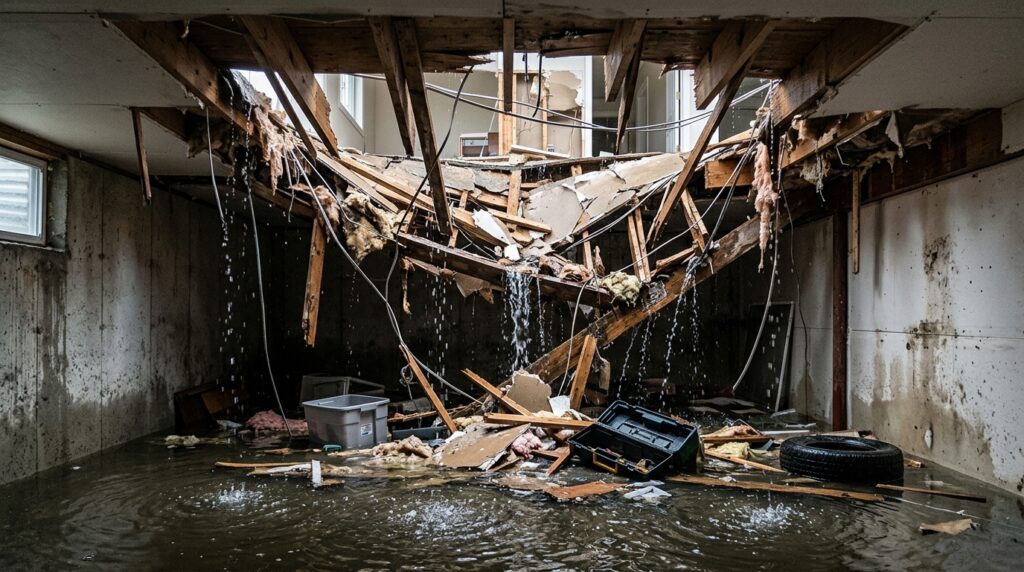
I’ve been watching the world’s plumbing for a long time. Rivers, aquifers, supply chains, treaties — they’re all systems, and systems fail the same way. Pressure builds somewhere out of sight. Nobody fixes the small leak. Then one day the whole thing lets go, and everybody acts surprised.
That’s where I think we are right now. So let me say plainly what I believe the number one problem in geopolitics is today.
It’s the collapse of the rules-based international order, and its replacement by a broken-up, deal-by-deal system run on economic coercion and raw power.
That’s a mouthful, so let me unpack it. “Rules-based international order” is shorthand for the whole apparatus built after 1945 — the UN, the trade bodies, the treaties, the courts, the shared assumption that a country’s word meant something and that breaking it carried a cost. It was never perfect. It was applied unevenly, and the strong bent it when they felt like it. But it existed. There was a floor.
The floor is gone. And I’d argue it’s a bigger threat right now than any single war on any single map.
I’m not alone in that read. The World Economic Forum’s risk work puts state-based armed conflict and geoeconomic confrontation — that is, using trade and money as weapons — at the top of the near-term threat list, ahead of most of what we’d normally call warfare (World Economic Forum, Global Risks 2026). Control Risks calls the world we’ve landed in “no rules” and means it literally (Control Risks, RiskMap 2026). When the risk analysts and the insurers start saying the same thing, I pay attention. Those people get paid to be boring and right.
Why I rank it first
Plenty of things scare me. This one scares me most because it’s the thing that makes every other thing harder to fix.
Economic warfare has gone mainstream. Big powers now treat their market position the way a general treats terrain. Tariffs, sanctions, export controls, chokeholds on critical minerals — these used to be emergency tools. Now they’re routine policy. Trade used to be the thing that made war expensive. That was the whole bet of the postwar era: tie everybody’s prosperity together, and they’ll think twice. That bet is being unwound in real time. Businesses and small countries are left picking their way through a minefield of restrictions that can change with a single announcement (Control Risks, CSIS).
Hard power is back, and it’s unilateral. Countries used to at least go through the motions — build a coalition, get a resolution, cite a legal basis. The motions mattered. They slowed things down and forced arguments into the open. Now states move alone and dare anyone to object. Some analysts call this “offshore coercive governance,” which is academic language for a simple thing: reaching across an ocean to make somebody do what you want, and skipping the paperwork.
Cooperation has seized up. The UN Security Council can’t move when its permanent members are the ones fighting. The World Trade Organization’s dispute system has been hollowed out. Climate frameworks depend on voluntary promises that nobody enforces. So we’ve got a governance vacuum sitting right where the borderless problems live — water scarcity, cyberattacks run by governments through deniable proxies, mass migration, pandemics, the whole list (World Economic Forum, TIME / Eurasia Group).
That last one is what keeps me up. I’ve spent decades on water. Water doesn’t respect borders. Neither does smoke, or a virus, or a piece of malware. Those problems can only be handled together. We’ve just dismantled the machinery for handling things together, right as the bill comes due.
How we got here
This didn’t happen overnight. It took about twenty years, and each step made the next one easier.
Stage one: trust drained out, at home first. The 2008 financial crisis did enormous damage that had nothing to do with balance sheets. Ordinary people watched institutions fail, watched the people who caused it walk away whole, and drew the obvious conclusion. Then COVID hit and showed everyone how thin the supply chains really were. A country couldn’t reliably get masks. Or chips. Or baby formula.
Both crises taught the same lesson: depending on the outside world is dangerous. That lesson is not entirely wrong, which is why it stuck. Populist and nationalist politics rose across most major powers, and the new leaders came in hostile to treaties, to foreign aid, to the whole idea that a country should tie its own hands (World Economic Forum, Global Risks Report 2026, S&P Global).
Stage two: the shooting started, and nothing happened to the shooters. Russia’s full-scale invasion of Ukraine in 2022 was the rupture. Whatever you think about the causes, one fact is hard to argue with — a permanent member of the UN Security Council invaded a neighbor, and the body built to prevent exactly that could do nothing. Then the Middle East went up. The lesson traveled fast: international law is a suggestion.
The asymmetric stuff drove it home. Houthi drone and missile strikes shut down large parts of Red Sea shipping — a small faction, cheap weapons, and a chunk of global trade rerouted around Africa (Council on Foreign Relations, ACLED Conflict Watchlist 2026). You don’t need a navy anymore to hurt the world economy. You need a workshop and a grudge.
Stage three: the two biggest players stopped pretending. This is where it crystallized.
The United States moved to an openly transactional posture. Alliances get priced. Allies get invoiced. The language coming out of Washington has stopped bothering with the old vocabulary of shared values, and there’s been a marked willingness to throw weight around in the Western Hemisphere and to press European partners hard on trade (TIME / Eurasia Group, Lazard). Whether you cheer that or hate it, it’s a break. For eighty years American power came wrapped in a story about rules. The wrapper’s off.
China went a different direction toward the same end. Beijing stopped trying to fit inside the Western economic order and started building around it. The push is self-reliance — its own chips, its own standards, its own payment rails. Meanwhile, it uses industrial overcapacity as leverage. When you can make solar panels, batteries, and electric cars cheaper than anyone alive, that’s not just commerce; it’s a lever. And it’s built out alternative groupings like the Shanghai Cooperation Organization as insulation from Western pressure (Lazard, Top Geopolitical Trends in 2026).
Two giants, two strategies, one result. Neither is investing in the shared system anymore. Both are building walls with doors they control.
What this actually looks like
Here’s what I think we’ve got now.
Not one world market with rules. Not a clean Cold War with two blocs either — that at least had a logic to it, and hotlines. What we’ve got is spheres of influence with fuzzy edges, and no referee.
In that world, everything becomes leverage. Microchips are leverage. Rare earth minerals are leverage. Shipping lanes, undersea cables, food exports, water rights, migration flows, the location of a data center — all leverage. There’s no category of thing that stays merely commercial. Every asset gets pulled onto the board.
I’ll give you the version I know best. Water. A river that crosses a border used to be a matter for a treaty and a joint commission. It was tedious work, and it mostly worked. In a transactional world, an upstream dam is a valve, and a valve is a weapon. Same water, same river, completely different meaning. Multiply that by every shared resource on earth, and you’ll see the shape of the problem.
The cost isn’t only conflict. It’s inefficiency on a scale that’s hard to picture. Duplicated supply chains. Redundant factories. Stockpiles that sit idle. Insurance premiums on routes that used to be safe. That’s real money and real energy spent on distrust — money and energy that isn’t going into anything that makes life better.
What I’m not saying
I want to be careful here, because it’s easy to write this kind of piece and sound like a man mourning a golden age that never existed.
The old order wasn’t fair. It was built by the winners of a particular war, and it served them well. Plenty of countries got lectured about rules they’d watched the lecturers break. I understand why the collapse doesn’t feel like a tragedy to everybody, and I won’t pretend otherwise.
I’m also not predicting doom. Systems under stress sometimes reorganize into something better. Regional arrangements can work. Smaller groups of countries that actually trust each other can get more done than a universal body that has to accommodate everyone.
My worry isn’t that the old order is dying. It’s the gap. We’ve torn out the old wiring before running the new. And the problems that need coordination — water, climate, disease, the governance of AI — aren’t going to wait politely while we figure out the replacement.
Where I land
If somebody asked me to name the single most important thing to watch, I’d skip the front lines and watch the rules.
Watch whether anybody still pays a price for breaking a treaty. Watch whether trade disputes go to a body or straight to retaliation. Watch whether two rivals can still agree on something small and boring — a shipping protocol, a disease-reporting standard, a fishing quota. Boring agreements are the load-bearing walls. When the boring stuff stops working, the serious stuff was never going to work.
I keep coming back to how systems fail. Not with one dramatic break, but with a slow loss of the small habits that kept things running. A meeting that stops happening. A protocol nobody bothers to follow. An inspection that gets skipped.
Right now we’re skipping a lot of inspections.
I don’t think that’s irreversible. I do think it’s the thing under everything else — the reason so many separate crises feel connected. And I think naming it plainly is where any honest fix has to start.
Sources
- World Economic Forum, Global Risks Report 2026 (full report)
- World Economic Forum, Global Risks 2026: Top 10 (two- and ten-year horizon)
- Control Risks, The New Rules – No Rules World (RiskMap 2026)
- Lazard, Top Geopolitical Trends in 2026
- TIME / Eurasia Group, The Top 10 Global Risks for 2026
- Council on Foreign Relations, Conflicts to Watch 2026
- ACLED, Conflict Watchlist 2026
- CSIS, Geopolitics and Foreign Policy
- S&P Global, Geopolitical Risk Insights